



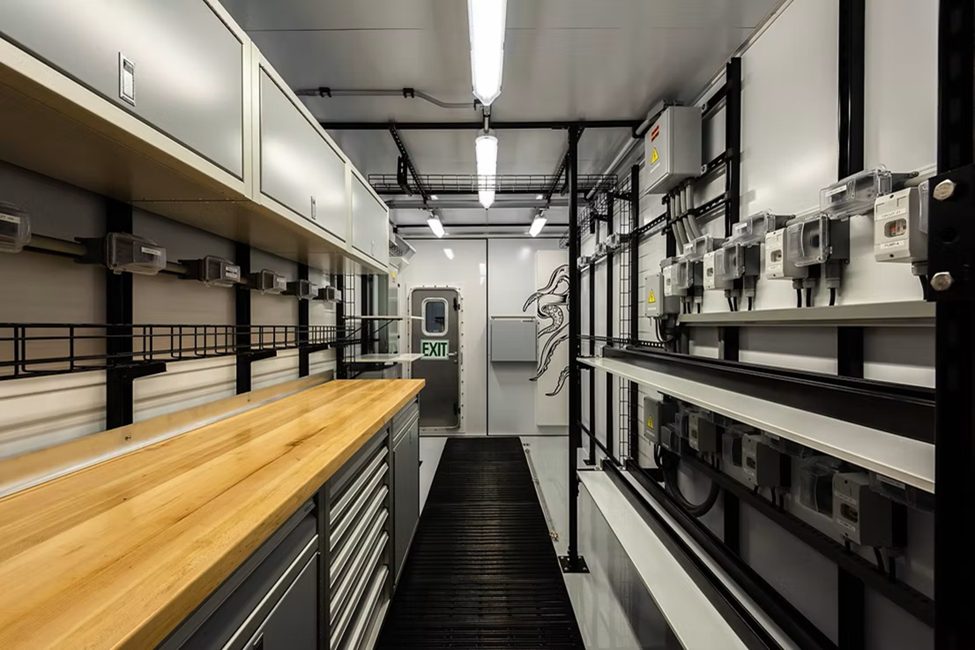
Creating a durable workspace does not always require a permanent building. For contractors, service technicians, racing teams, mobile repair businesses, and specialty retailers, a shipping container workshop can provide a secure, efficient, and highly versatile work environment. By using shipping containers as a foundation, businesses can create container shop designs that support daily operations while maintaining flexibility to adapt to changing locations or project needs.
The strongest results come from considered planning. A successful workshop conversion should account for container size, insulation, ventilation, electrical systems, work surfaces, tool storage, and safe movement through the space. With the right storage solutions and workstation layout, a shipping container can become a practical workshop, mobile shop, or field-ready service hub built around the way your team actually works.
A shipping container workshop is a functional work area built inside a modified shipping container. Instead of being used only for storage, the interior is converted into a practical workspace with lighting, power access, storage, workbenches, and defined equipment zones. These container workshops are commonly used for construction support, mobile repairs, motorsports, equipment service, field operations, and small mobile shop applications.
A storage container workshop often begins as a basic steel enclosure, but the finished space depends on the quality of the planning and interior systems. It needs to support safe movement, organized tool access, reliable work surfaces, and proper ventilation. For many businesses, the appeal is that the unit can be fully prepared in one location and then deployed to a job site, event space, racetrack, or remote operation with most of the setup already complete.
Moduline aluminum cabinets help create that structure by supporting organized storage, durable work surfaces, and layouts built around real workflows. The goal is to support the way work gets done, not just fill the space.
The decision to use a containerized workshop is often driven by the need for strength, security, and flexibility. Compared with many temporary workspaces, a cargo container workshop provides a secure enclosure that helps protect tools, materials, and equipment when not in use. Corrugated steel walls, lockable doors, and weather-resistant construction make containers a practical option for businesses that need a reliable work area without investing in traditional construction immediately.
Shipping container workshops can also be cost-effective because the primary structure is already in place. Instead of building from the ground up with framing, roofing, and exterior walls, the conversion focuses on making the interior usable. That can include insulation, climate control, electrical systems, flooring, ventilation, and storage. When planned correctly, the result is a durable workshop that can be moved, expanded, or reconfigured as needs change.
Another advantage is consistency. Businesses with multiple crews, locations, or events can develop a repeatable layout and deploy similar workshop units across regions. This supports standardized storage, faster setup, and a more professional experience for both employees and customers.
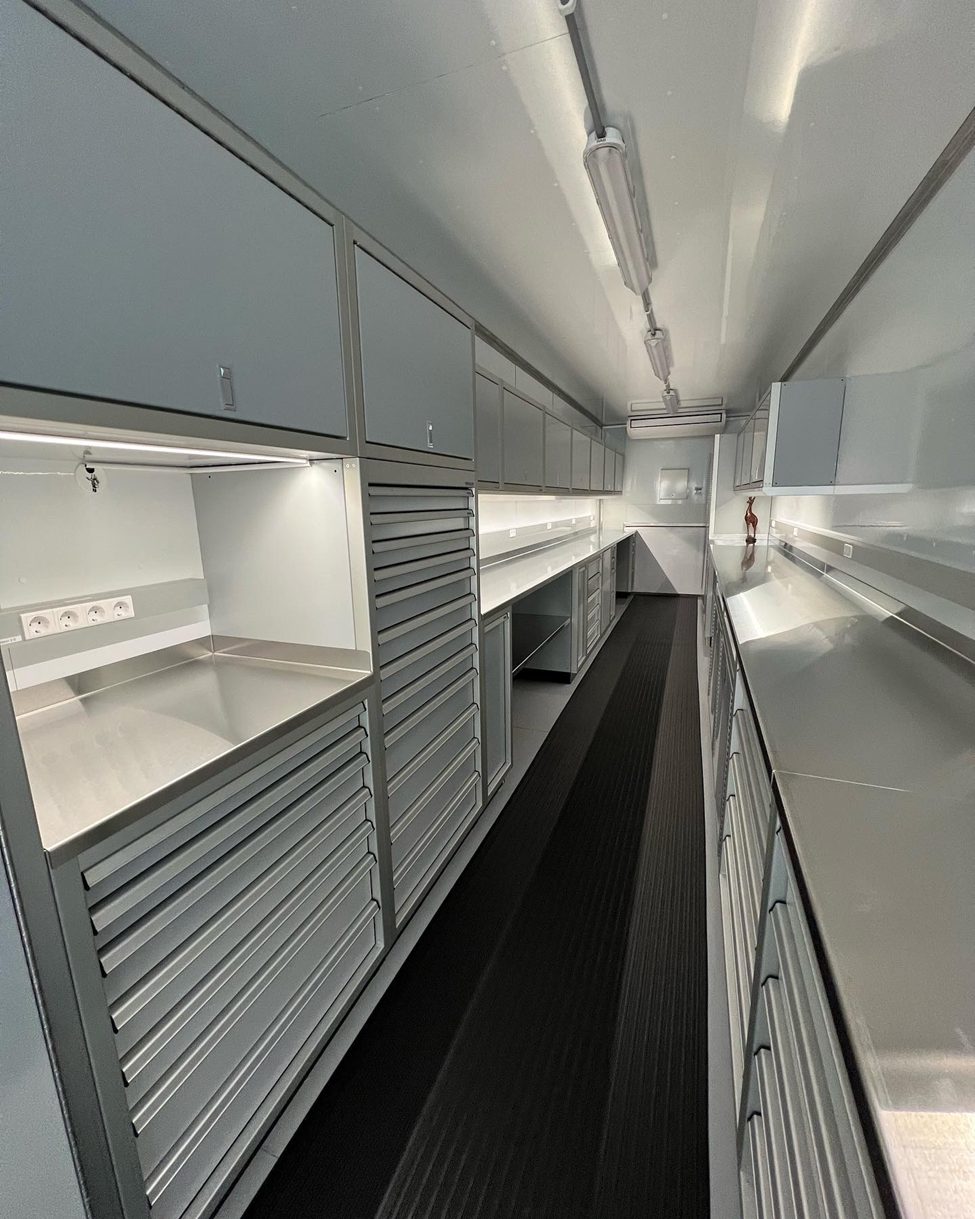
When converting a shipping container into a workshop, the first decision is size. Most container workshops follow standard dimensions, but the right choice depends on how the space will be used, what tools need to be stored, and whether the unit needs to remain mobile.
20ft Standard Unit: A 20ft container is often used for mobile repair setups, compact tool storage, or a focused mobile shop. It fits into tighter spaces while still supporting a full-length workbench, wall cabinets, and overhead storage. Moduline’s Pro Mobile series is well-suited for this type of compact, mobile workspace.
40ft High-Cube Unit: For larger work areas, a 40ft container provides room for separate zones, longer work surfaces, and additional equipment storage. A high-cube model adds vertical clearance, which can improve lighting, HVAC, and shelving options.
Double-Wide Shipping Container Workshop: A double-wide workshop is created by joining two units to form a wider floor plan. This works well for vehicle repair layouts, large fabrication tasks, or operations that require space for heavy equipment and safe movement. Moduline’s Pro Series is well-suited for creating a functional, streamlined workspace at this scale.
Regardless of container size, the interior storage system should be selected with durability in mind. Aluminum cabinets, such as those from Moduline, can help create a clean, long-lasting layout that stands up to demanding workshop use.
Shipping Container Workshop Ideas
Effective shipping container workshop designs start with the layout. Because a standard container is narrow, the layout should protect open floor space while keeping tools and supplies within easy reach. A practical layout often places base cabinets, wall cabinets, and work surfaces along one wall, leaving the opposite side open for movement, equipment, or staging.
Dividing the space into zones makes the workshop easier to use. A clean workstation can be reserved for diagnostics, paperwork, electronics, or computer-based work, while a heavier work area handles repairs, assembly, or equipment service. This approach helps reduce clutter and prevents cross-contamination between clean and heavy-use areas.
Other useful additions include fold-down work surfaces, overhead shelves, battery charging stations, lockable drawer storage, and wall-mounted tool organization. For more advanced setups, exterior additions such as awnings, fold-out panels, or service windows can extend usable space when the container is stationary.
In mobile service environments, a trailer-and-vehicle cabinet setup can serve as a strong reference for compact storage, secure drawers, and efficient workstation design.
A successful container conversion follows a clear sequence. Before starting, inspect the container for structural condition, flooring quality, prior cargo exposure, rust, leaks, and door performance. It’s also important to check local permitting, electrical requirements, ventilation standards, and any site-specific regulations. Workshop plans should address both workflow and safety requirements.
Plan the Layout: Map the work area, tool storage, workstation, entry points, and open floor space before making any modifications. This helps avoid a layout that becomes crowded once cabinets and equipment are installed.
Modify Openings Safely: Door, window, vent, or utility openings may require structural framing or reinforcement. This step must be handled carefully to maintain the container’s strength and weather resistance.
Add Insulation and Ventilation: Steel conducts heat and cold quickly. Insulation, proper ventilation, and climate control help manage temperature and humidity, reduce condensation, and create a stable, comfortable workspace.
Install Electrical Systems: Lighting, outlets, tool charging, and equipment power should be planned around actual workflow. A licensed professional should be involved where required, especially for permanent or high-load systems.
Build the Interior Workstation: Workbenches, storage systems, and work surfaces should be securely anchored. Aluminum cabinets help reduce added weight while still providing durable, organized storage.
Finish the Floor: Many containers have an existing plywood or hardwood floor system. Depending on the container’s condition and prior use, the floor may need to be sealed, covered, repaired, or replaced with a durable, non-slip surface.
By following a detailed plan, the workshop can support safe movement, efficient work, and long-term durability instead of becoming a crowded tool storage space.

A workshop-ready container requires more than basic storage. It should reflect the type of work being performed, the equipment being stored, and how the space is used day to day. A well-designed container workshop often includes reinforced framing around openings, insulated walls, lighting, ventilation, and secure storage.
Within that layout, different areas can be tailored for specific functions. One area may hold safety gear and personal items, another may include high-density drawer storage for hardware, and another may serve as an assembly or repair workstation. If the workshop will store heavy equipment, cabinets, and shelving should be selected and installed with load capacity, anchoring, and access in mind.
Many workshops start with core workbenches and storage sections, then expand as needs grow. This keeps the workspace functional from day one while allowing the layout to evolve over time.
Moduline’s Pro Cabinet Configurator allows you to design a layout that fits your workflow before installation begins.
Shipping containers are especially effective for mobile shops, pop-up retail, and on-site service operations. A mobile shop design allows businesses to bring tools, products, or repair services directly to customers, rather than relying on a fixed location. This is especially valuable for events, field service, racing, specialty retail, and mobile repair operations.
A well-designed mobile shop balances customer experience with secure storage. The front area should present a clean, professional appearance, while the back area should provide secure storage with lockable drawers, work surfaces, and organized inventory. A strong mobile shop setup should also account for lighting, safe access, branding, climate control, and how the space functions in transit versus when it’s open.
Mobile shop layouts should avoid unnecessary clutter. When customers see an organized, professional environment, it increases confidence in the business and the quality of its service.
Converting a shipping container into a workshop is a practical way to create a secure, organized, and adaptable workspace without the cost and constraints of permanent construction. Compared with traditional builds, a container-based workshop can reduce structural build-out while providing a mobile or semi-mobile solution that adapts as needs change.
For container workshops to perform well, the interior matters just as much as the exterior shell. Insulation, ventilation, electrical systems, flooring, storage, and workstation planning all directly impact how the space performs over time. Whether the goal is a stationary workshop, a mobile repair unit, or a modern mobile shop, the right layout and storage system make the difference.
Moduline provides aluminum cabinet systems, custom layouts, and design tools that help turn a container into a clean, durable, and professional workspace built around real-world use.
Start planning your container workshop with Moduline’s design team, or build your layout using our 3D configurator to see what’s possible before installation begins.
How do I manage temperature and humidity in a shipping container workshop?
Temperature and humidity control should be addressed early, as steel containers heat and cool quickly and can collect condensation. Insulation, proper ventilation, sealed openings, and climate control help protect tools and materials while creating a more stable workspace. Spray foam insulation is often used to reduce air gaps and limit condensation, but the right solution depends on climate, budget, and how the workshop will be used.
How to modify a shipping container for a workbench?
The most effective approach is to plan the workstation around wall structure, power access, and available floor space. Workbenches, cabinets, and shelving should be securely anchored, especially for mobile applications. Aluminum work surfaces and cabinets are a strong option because they provide durable, organized storage without adding unnecessary weight.
How to design a container shop for maximum floor space?
Maximizing floor space starts with using vertical wall space. Wall-mounted cabinets, overhead storage, compact drawer systems, and a continuous workbench help keep the center of the container open for movement. Planning tools like Moduline’s 3D PRO Cabinet Configurator, along with custom 3D layout drawings from our design team, make it easier to visualize and refine the layout before installation.
Is a shipping container workshop more cost-effective than traditional construction?
It can be, depending on the project. A shipping container already provides the primary structure, which can reduce construction costs. However, the total investment depends on the condition of the container, insulation, electrical systems, HVAC, flooring, openings, storage, and labor. The greatest value often comes from durability, mobility, and faster deployment compared with traditional construction.
What tools and materials are needed for a container conversion?
A typical conversion may require framing materials, insulation, ventilation components, electrical systems, flooring, lighting, work surfaces, and storage solutions. The exact materials depend on how the workshop will be used and whether it needs to support mobile service, retail, storage, or heavy-duty repair work.