



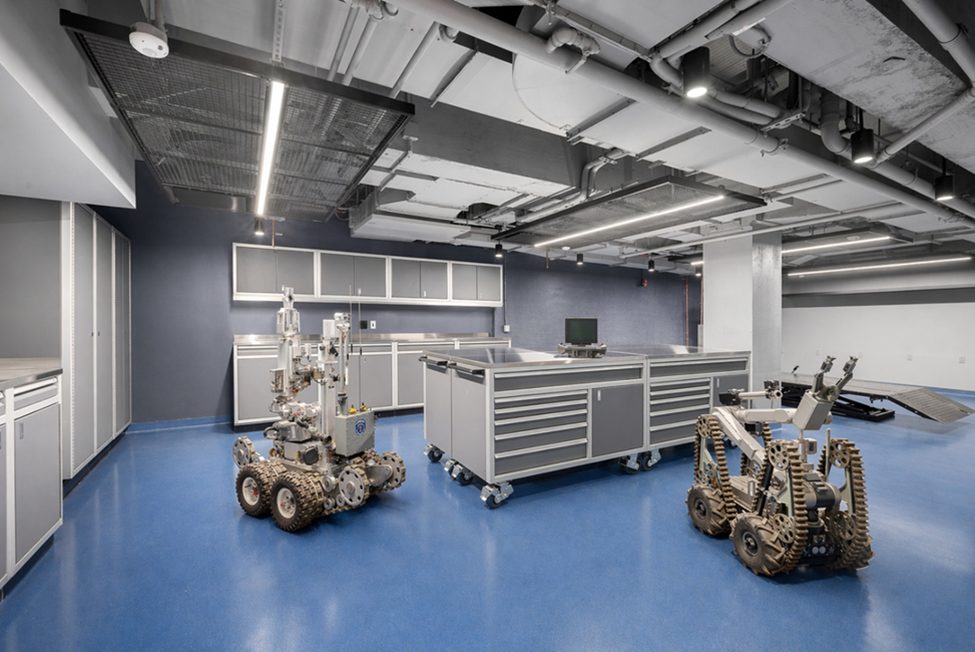
Government facilities don’t have the luxury of inefficiency. Whether it’s a police department managing evidence, a fire station organizing turnout gear, or a public works team maintaining equipment, everything depends on having the right tools in the right place, ready at a moment’s notice.
Storage plays a direct role in that readiness. Poorly organized systems slow response times, increase wear on equipment, and create unnecessary risk. The right commercial cabinet system does the opposite, improving access, protecting assets, and supporting long-term operational performance.
This guide breaks down how to choose and implement storage systems built for government environments, where durability, compliance, and reliability are essential.
Government facilities operate under a different set of expectations than commercial or private environments. Every purchasing decision must balance performance, longevity, and responsible use of public funds.
Storage systems are expected to last for years, often decades, while maintaining consistent performance under heavy daily use. Frequent replacement or maintenance is not just inconvenient. It creates additional cost, downtime, and procurement overhead that agencies work to avoid.
At the same time, most government storage is specification-driven. Whether outfitting a police evidence room, a fire station apparatus bay, or a public works fleet facility, cabinets often need to meet defined requirements for size, layout, load capacity, and security. Off-the-shelf solutions rarely align perfectly with these needs, which makes configurable or custom-designed systems essential.
Consistency is another key factor. Many agencies standardize storage across multiple locations to simplify training, maintenance, and procurement. A system that works in one facility should translate to another without requiring a complete redesign.
Across all of these environments, storage must support:
When these requirements are not met, the impact shows up quickly in wasted time, damaged equipment, and increased operational costs.
Not all cabinets are built for the same purpose. Commercial-grade cabinets are designed for continuous, high-demand use in environments where failure is not acceptable. This sets them apart from light-duty storage commonly found in residential or low-use settings.
In government facilities, cabinets are opened, loaded, and relied on every day. They must support significant weight, maintain alignment over time, and continue functioning without frequent adjustment or repair. This level of use requires a different standard of construction.
Material plays a central role in meeting that standard. While many cabinet systems rely on steel or wood, aluminum offers a different approach. It provides strength without excess weight, resists corrosion in high-moisture or coastal environments, and maintains its structural integrity over long service cycles.
Beyond material, commercial cabinets are defined by how they are built. Reinforced frames, precision hardware, and full-extension drawer systems are designed to handle repeated use without degradation in performance. The focus is on consistent operation over time, not just initial fit and finish.
Another key difference is adaptability. Commercial projects often require cabinets to be planned around specific tools, equipment, and workflows. That level of precision typically comes from working with a manufacturer who can design to a specification, rather than relying on fixed, off-the-shelf options. This approach makes it easier to meet exact requirements and maintain consistency across multiple facilities.
The result is a storage system that supports long-term reliability, reduces maintenance demands, and aligns with the performance expectations of government environments.

Selecting the right cabinet system involves more than choosing sizes or layouts. Government buyers must evaluate how a system will perform over time, how well it aligns with operational needs, and how efficiently it uses available space.
Material choice directly impacts durability, maintenance, and lifecycle cost. Cabinets used in government environments must withstand daily use, exposure to moisture or chemicals, and changing conditions without degrading. Materials that resist corrosion and maintain structural integrity over time help reduce maintenance demands and extend service life.
Most government projects are driven by defined requirements. Cabinet systems should be planned around the tools, equipment, and workflows they need to support. Working with a manufacturer that can design to a specification helps ensure proper fit, efficient layouts, and consistent performance across facilities.
Storage needs vary depending on how and where cabinets are used. Mobile systems support field operations, fleet vehicles, and transport applications where stability and secure latching are critical. Fixed installations anchor maintenance bays, evidence rooms, and storage areas within a facility. Many environments require a combination of both.
Efficient use of space improves both safety and productivity. High-density drawer systems and vertical storage reduce clutter and free up floor space, especially in high-traffic or space-constrained environments. A well-planned layout keeps frequently used items accessible without disrupting workflow.

An effective storage system is made up of multiple cabinet types working together to support different tasks within a facility. Rather than selecting a single solution, most government environments require a combination of storage designed around how work actually gets done.
Drawer cabinets are typically the foundation of a well-organized system. They provide structured storage for tools, parts, and hardware, keeping items separated, easy to locate, and protected from damage. This is especially important in maintenance facilities, public works garages, and military workshops where quick access and accountability are essential.
Base cabinets with integrated work surfaces create dedicated areas for repair, assembly, and inspection. These are commonly used in fleet maintenance bays, equipment rooms, and service areas where technicians need a durable, organized workspace that keeps tools within reach.
Mobile cabinet systems support operations that extend beyond a single facility. In fleet vehicles, mobile command units, and emergency response applications, storage must remain secure and functional during transport. Systems designed for mobility help ensure equipment stays organized and protected, even in high-vibration environments.
An effective storage system is not just a collection of cabinets. It is a planned layout built around how a facility operates on a daily basis.
The starting point is workflow. Tools and equipment should be stored based on how they are used, not simply where space is available. Frequently used items need to be accessible without disrupting movement through the workspace, while less frequently used equipment can be stored in higher-density areas. This reduces wasted motion and helps maintain efficiency during routine tasks and time-sensitive operations.
Security and accountability also play a central role. In many government environments, tools, equipment, and materials must be tracked and protected. Storage systems should support controlled access and clear organization so items can be located quickly and verified when needed.
Consistency across spaces is another important consideration. Standardizing layouts and cabinet configurations makes it easier for personnel to move between facilities without relearning where items are stored. It also simplifies maintenance, replacement, and future expansion.
Finally, layout and organization directly impact safety. Clear pathways, reduced clutter, and properly stored equipment help minimize hazards in high-traffic work areas.
When these elements are considered together, the result is a storage system that supports daily operations, improves efficiency, and maintains long-term reliability.
Initial cost is only one part of the decision. In government environments, purchases must be justified not just at the time of procurement, but over the full lifespan of the product.
Lower-cost cabinets can appear comparable upfront, but often fall short under continuous use. Drawer hardware wears out, materials degrade in demanding conditions, and structural components lose alignment over time. These issues lead to repairs, replacements, and operational disruption, all of which increase total cost.
For government agencies, these failures create additional challenges. Replacement requires new procurement cycles, added administrative effort, and potential downtime that impacts daily operations. What begins as a lower upfront investment can quickly become a recurring expense.
Higher-quality cabinet systems are designed to avoid these issues. Durable materials, precision hardware, and stable construction allow them to perform consistently over long service cycles with minimal maintenance.
Over time, this results in:
The result is a storage solution that delivers better long-term value and supports responsible use of public funds.

Selecting the right storage partner is as important as selecting the cabinet system itself. In government environments, the ability to deliver consistent results across planning, procurement, and installation is critical.
Experience with government applications is a key factor. Facilities such as police departments, fire stations, and military installations have specific requirements that differ from typical commercial projects. A partner familiar with these environments is better equipped to anticipate challenges, design to specification, and deliver systems that perform as expected.
Procurement readiness is also essential. Working with a manufacturer that offers Made in the USA products and supports GSA Advantage purchasing can simplify the buying process and help ensure compliance with federal and municipal requirements.
Design capability should not be overlooked. Storage systems often need to be planned in detail before installation, especially in larger or multi-location projects. A partner that provides design support and visualization tools can help agencies evaluate layouts, confirm specifications, and make informed decisions before committing to a solution.
Finally, consistency and long-term support matter. Government facilities frequently expand, renovate, or standardize across multiple locations. Choosing a partner that can deliver the same quality and configurations over time helps maintain continuity and reduces complexity in future projects.
A qualified partner does more than supply cabinets. They help ensure the system is planned correctly, delivered reliably, and supported over the long term.
In government facilities, storage plays a direct role in efficiency, safety, and long-term operational performance. The right system supports daily workflows, protects critical equipment, and reduces the need for ongoing maintenance and replacement.
Selecting a storage solution requires more than comparing specifications. It involves choosing materials, layouts, and partners that align with the demands of the environment and the expectations placed on public resources.
Moduline aluminum cabinets are designed to meet those demands, providing a durable, configurable solution built for long service life in government applications.
Here are answers to some of the most frequently asked questions about government storage systems.
Why are aluminum cabinets preferred in government facilities?
Aluminum offers long-term durability without corrosion. It performs reliably in demanding environments where moisture, chemicals, or heavy use can cause other materials to break down over time.
Are these systems suitable for high-density storage?
Yes. Drawer-based layouts and vertical storage configurations allow agencies to maximize capacity while keeping tools and equipment organized and accessible.
Are Moduline cabinets compliant for federal procurement?
Yes. Moduline offers solutions, made in the USA, that are GSA Advantage approved, simplifying government purchasing.
What makes your drawer systems different?
They are designed for consistent performance under heavy use, with secure latching and smooth operation that holds up over time in both stationary and mobile environments. Moduline’s patented QuikDraw latch system provides fast, reliable access to stored items while maintaining organization and control.
Do you offer custom storage designs?
Yes. Systems can be designed around your specific tools, space, and workflow requirements. Moduline provides 3D layout drawings to help visualize and confirm your setup before installation, and an online 3D configurator allows you to explore and build cabinet layouts based on your needs.
Start building a smarter government storage system.
Work with Moduline to design a cabinet system tailored to your facility. Our team will help you plan, specify, and implement a solution that performs reliably over the long term.