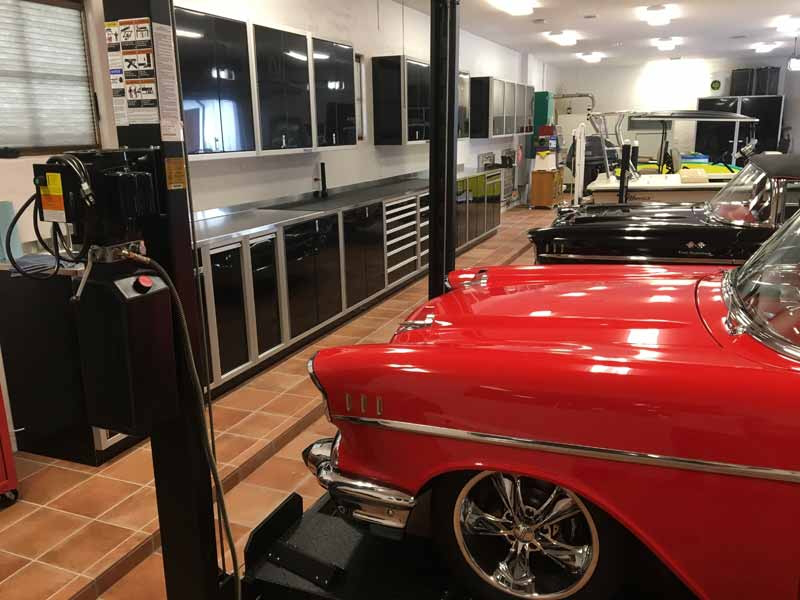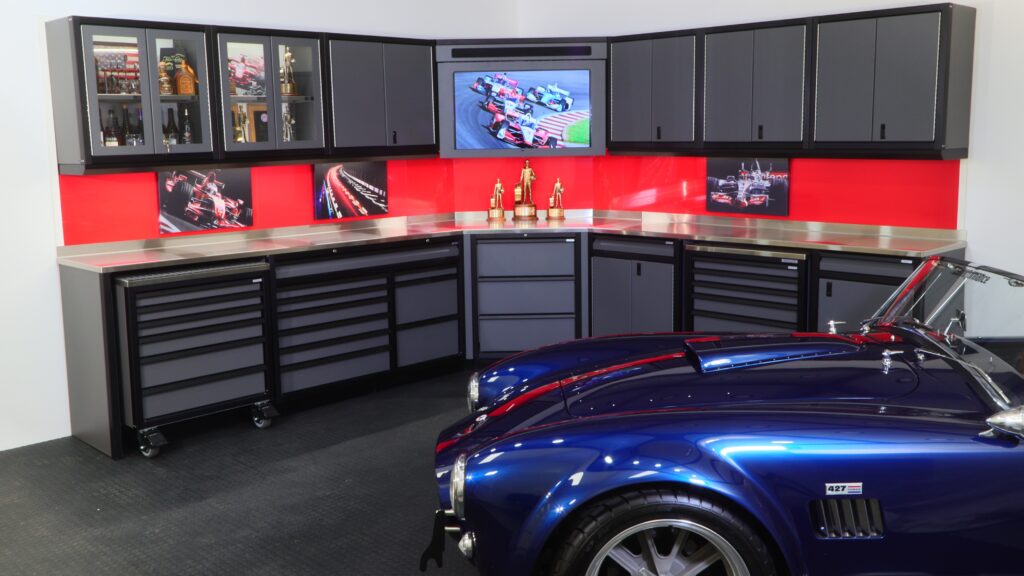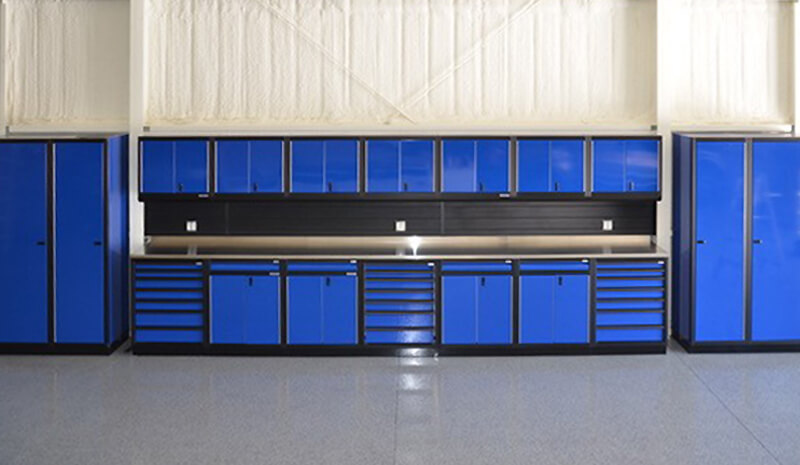
The best material for garage cabinets depends on more than appearance. A garage can be a showroom, workshop, storage room, or all three, often with greater swings in temperature and humidity than the rest of the home. The cabinets need to suit that environment, as well as how the space is actually used.
Garage Cabinets come in all sorts of materials: wood, steel, plastic, MDF, and aluminum. But if you’re looking for garage cabinets with durability, strength, corrosion resistance, and longevity, aluminum offers the right balance. Aluminum is lightweight, resistant to rust and moisture-related damage, and well-suited for projects ranging from professional shops to residential garages to mobile applications.
|
Material |
Advantages |
Considerations |
Best Suited For |
|
Aluminum |
Lightweight, strong, corrosion-resistant, unaffected by humidity |
Premium investment |
High-end garages, workshops, trailers and demanding workspaces |
|
Steel |
Strong and widely available |
Heavy and vulnerable to corrosion if its finish is damaged |
Fixed storage in controlled environments |
|
Wood |
Warm, residential appearance with many finish options |
Moisture and humidity can cause warping or deterioration |
Conditioned spaces where appearance is the priority |
|
MDF |
Smooth finish and accessible price point |
Sensitive to moisture and changing humidity |
Light-duty storage in controlled environments |
|
Plastic / Resin |
Lightweight and economical |
Better suited to lighter or temporary storage |
Seasonal items and basic household storage |
The key is to consider not only what a cabinet looks like on installation day, but how the material will respond to the garage over time.
Material selection becomes easier once you consider the room itself.
A pristine collector garage has different priorities from a working home shop. A coastal garage introduces different conditions from a dry, climate-controlled space. A trailer or service vehicle adds another concern entirely: every pound of cabinetry contributes to the vehicle’s overall weight.
Storage should also reflect what goes inside it. Hand tools, detailing supplies, automotive parts, lawn equipment, power tools, and bulky seasonal items all place different demands on a cabinet system.
That is why the best garage storage cabinets are rarely chosen by material alone. Construction, layout, hardware, access, and the intended workload all matter.
Wood cabinetry can bring a familiar, furniture-like quality to a garage, particularly when the space is designed as an extension of the home. It can also be painted, finished, and built around a particular aesthetic.
The challenge is the environment.
Wood is susceptible to moisture, humidity, warping, and deterioration. Those issues become more relevant in garages that are not consistently climate-controlled. Seasonal changes, wet vehicles, and ordinary garage humidity may make wood less predictable over time than metal cabinetry.
MDF presents a similar concern. It may work in a controlled interior environment, but wood and MDF can be affected by humidity, unlike aluminum.
For a garage designed primarily for appearance and maintained much like an interior room, wood may still be an option. For a working garage, the material deserves more scrutiny.
Plastic and resin cabinets have two clear attractions: they are light and typically inexpensive.
For seasonal decorations, gardening supplies, cleaning products, or other light-duty storage, that may be enough. Plastic is primarily an economical solution for temporary or less demanding storage rather than a professional-grade cabinet material
When you use your garage or workspace for regular automotive work or heavier equipment, construction becomes significantly more important. Cabinets must have durable drawers, hinges, frames, work surfaces, and latching systems to withstand repeated use.
For buyers considering metal garage cabinets, the comparison usually comes down to steel and aluminum.
Steel is strong, which explains its long history in workshops and industrial storage. Its disadvantages are weight and susceptibility to corrosion. Steel cabinets can become vulnerable when protective finishes are damaged, especially in moisture-rich environments.
Aluminum approaches the problem differently. It provides a high strength-to-weight ratio while resisting rust, making it especially useful where cabinetry must be durable without adding excess mass. Aluminum’s lower weight profile helps not only during installation but also in trailers, vans, race haulers, and other vehicles where overall weight matters.
Humidity is another important distinction. Aluminum is not susceptible to the warping associated with wood or MDF, and it does not rust like steel. That makes it especially well suited to garages where changing seasons, damp conditions, or road moisture are part of everyday life.
For a stationary installation in a relatively controlled environment, steel can provide practical, durable storage.
Aluminum becomes more compelling when weight, moisture resistance, ease of installation, or long-term appearance move higher on the priority list. Those qualities matter most in custom garages, professional workshops, automotive spaces, and mobile installations.
The best option ultimately depends on use. But for a premium garage designed as a long-term investment, aluminum avoids several of the compromises associated with heavier or moisture-sensitive materials.
Calling a cabinet “aluminum” says very little about how it was actually built.
The details matter.
On our PRO Series wall cabinets, for example, the doors use a double-wall design with inner hat bracing. The outer door panels are made from .063-inch high-alloy aluminum with .040-inch aluminum inner panels. Full-length continuous aluminum hinges support the door structure, while rigid integrated aluminum frames use reinforced corners and precision hardware. Front frames are clear anodized and sealed.
Customizable shelving can be repositioned in 2¼-inch increments, allowing the interior to change as storage needs evolve. Selected drawer units use full-extension ball-bearing slides, while our patented QuikDraw® system keeps drawers securely closed while still allowing them to open easily from anywhere along the handle.
These are the kinds of details worth comparing when looking at the best garage cabinet brands. Material is the foundation, but frame design, doors, hinges, drawers, hardware, fit, and finish determine how refined the finished system seems in daily use.
There is no useful single weight-capacity number for an entire category of garage cabinetry. A wall cabinet, pull-out shelf, base cabinet, drawer unit, and rolling toolbox serve different functions and are built differently.
Instead, consider the complete cabinet design intended for the load. Moduline’s cabinets include reinforced frames, braced doors, adjustable aluminum shelving, full-extension drawer hardware, and purpose-built storage options for everything from residential garages to professional and government applications.
Plan for heavy items from the beginning. Frequently used tools generally belong where they’re easy to reach, while larger or less-accessed items can go in closets, base cabinets, or other dedicated storage zones.
When outfitting a work or storage area, there are two main options: Garage Cabinets and Open Shelving. Shelving can be quite useful if visibility and quick access are top priorities. However, cabinetry offers a different level of organization.
Opting for cabinetry lets you build your space with drawers that keep smaller tools and parts organized. Wall cabinets use vertical space while keeping the floor clear. Tall cabinets are great for larger equipment, while base cabinets combine enclosed storage with a continuous work surface.
In a well-planned garage, these parts do not need to compete. The goal is to assign each storage type to the items and activities it serves best. Moduline’s own design approach starts with the space, tools, and workflow rather than treating every garage as the same room.
A luxury garage demands more than storage capacity. Cabinet lines, finishes, proportions, countertops, and the relationship between the cabinetry and the vehicles all contribute to the room.
Aluminum works particularly well here because professional-grade construction can be paired with a highly finished appearance. Moduline’s PRO Series is available in multiple sizes, colors, frame finishes, and custom configurations designed around individual spaces.
Durability and access take priority.
A workshop may benefit from a combination of drawer storage, base cabinets, wall cabinets, closets, work surfaces, dividers, liners, and pull-out shelves. The objective is not simply to fit more into the garage. It is to place tools where they make sense for the work being done.
Weight becomes a design consideration.
Moduline uses aluminum in mobile applications because it helps keep vehicle weight down while providing the strength required for professional storage. Secure drawers also become important in transit, which is one reason the QuikDraw® latch system was developed to keep drawers closed while a vehicle is moving.
Material resistance moves higher on the list.
As mentioned, aluminum resists corrosion, mold, and mildew, and it does not warp with changing humidity. For garages exposed to moisture or changing seasonal conditions, those characteristics can remove some of the long-term concerns associated with wood, MDF, or steel.
Look beyond the finish.
Ask how the cabinet is constructed. Examine the doors, frames, hinges, drawer slides, latches, shelving, and work surfaces. Consider whether standard sizes will fit the room or whether the manufacturer can design around unusual dimensions, corners, doors, utilities, and existing equipment.
Design support also matters in a premium installation. Moduline provides layout consultation and detailed CAD drawings to help plan cabinet systems before installation. Its cabinets are precision-engineered and manufactured in the USA, and Moduline offers a limited lifetime warranty to the first owner against defects in manufacturing, materials, and workmanship.
A cabinet should not only fit the garage. It should fit the way the garage is used.
Not every garage needs the same choice.
A lightly used storage room may need nothing more than basic cabinetry. A conditioned show garage may place greater emphasis on finish. A working shop needs durability and easy tool access. A trailer introduces weight and movement into the equation.
For garages where those priorities begin to overlap, aluminum makes a persuasive case. It combines low weight with strength, resists rust and moisture-related damage, works across fixed and mobile environments, and lends itself to the precise construction and clean detailing expected in a premium space.
Moduline has spent more than 30 years building aluminum storage systems for custom garages, workshops, racing applications, government facilities, and specialized vehicles. Each system can be designed around the space rather than forcing the space to work around the cabinets.
Ready to create a garage built around the way you work? Explore Moduline’s PRO Series or speak with the Moduline team about a custom cabinet layout.
It depends on the metal. Steel can be vulnerable to corrosion, particularly if its protective finish becomes damaged. Aluminum does not rust, which is one reason Moduline uses it for residential garages, professional shops, trailers, vans, and other tough environments.
Aluminum is a strong option for buyers specifically concerned about rust. It provides metal construction without the rust susceptibility associated with steel and resists changing humidity.
The answer depends on the garage environment. MDF and wood are sensitive to humidity and can warp as conditions change. A consistently conditioned space presents fewer concerns than a garage exposed to moisture and periodic temperature changes.
No single specification describes how an entire cabinet will perform. When comparing steel cabinets, review the manufacturer’s construction details for the specific product rather than choosing on one material measurement alone. Doors, frames, bracing, hinges, shelving, drawer hardware, and the intended application should all be part of the comparison.
A finish can help protect steel, but steel may still become vulnerable to corrosion when its protective coating is damaged. Aluminum removes that particular concern because rust resistance comes from the material itself rather than relying only on a surface coating.
Cabinet life depends heavily on the material, construction, environment, and level of use. Moduline designs its aluminum cabinets for long-term professional and residential use and backs cabinets with a limited lifetime warranty for the original owner, warranting defects in manufacturing, materials, and workmanship.