



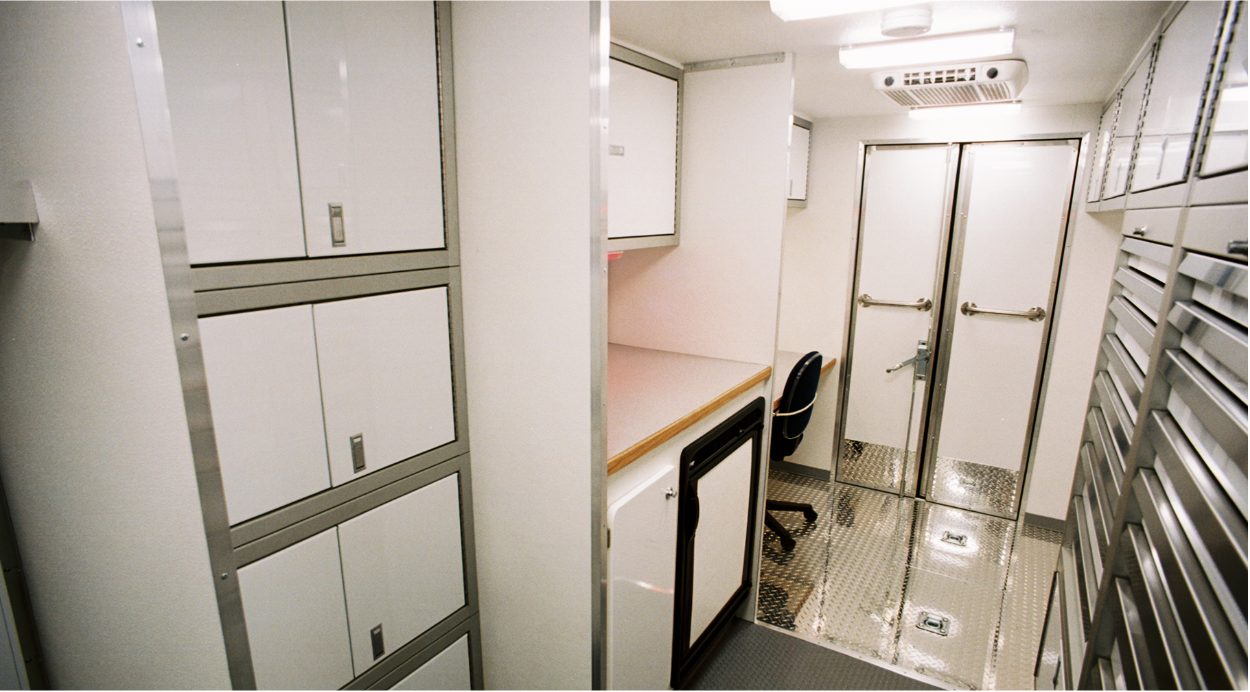
Military facilities do not have room for unreliable storage. Whether equipment is used in a maintenance bay, fleet facility, armory support area, mobile unit, or container-based workspace, personnel need tools and supplies stored safely, organized clearly, and ready when work begins.
A military cabinet is not simply a place to put gear. It is part of the infrastructure that supports readiness, accountability, and long-term equipment protection. Storage must withstand daily use, shifting requirements, high-traffic environments, and, in some cases, transport or field deployment.
The right cabinet set up should balance durability with access. It should protect military equipment, improve parts storage efficiency, and help teams maintain a workspace that supports fast, organized work. From fixed installations to custom shipping-container workspaces, storage design plays a direct role in how well a facility operates.
Durability comes first. Military storage cabinets should be built from materials that can withstand repeated use, weight, vibration, moisture, and demanding environments.
The organization supports readiness. A well-planned military storage system keeps tools, parts, and equipment easy to locate, verify, and return.
Material choice affects long-term value. Aluminum cabinets provide strength without excess weight and resist corrosion better than many traditional materials.
Layouts should match the application. Storage for military maintenance, mobile units, and fixed facilities should be planned to accommodate the specific equipment, workflow, and access requirements of each space.
A military storage cabinet must exceed the expectations of a standard residential or light-commercial cabinet. These environments often involve heavier tools, frequent access, strict organizational requirements, and conditions that can expose storage systems to moisture, vibration, dust, or frequent movement.
The first requirement is structural durability. Cabinets used in military applications must support the weight of tools, parts, supplies, and equipment without losing alignment or performance over time. Drawers, hinges, frames, and work surfaces should continue to operate smoothly even with frequent use.
Security and accountability are also central requirements. Military equipment often needs to be stored in a way that supports controlled access and clear organization. A metal storage cabinet with proper locking options, secure drawer function, and defined storage zones can help reduce misplaced assets and improve inventory visibility.
Space efficiency matters as well. Many storage facilities, maintenance shops, container workspaces, and mobile units have limited room. A strong system should make better use of vertical space, drawer storage, and base cabinets while keeping walkways and work areas clear.
When these standards are met, the cabinet system helps reduce downtime, protect equipment, and support the personnel who rely on the space every day.
Explore Custom High-Performance Cabinets
Military storage solutions vary based on how and where the cabinets will be used. A fixed maintenance facility has different needs than a mobile command unit, trailer, or container-based shop. The right system often includes several cabinet types working together.
Base Cabinets: Base cabinets create stable storage under work surfaces and are useful for tools, heavy parts, and supplies that need to remain close to active work areas.
Drawer Cabinets: Drawers provide organized storage for parts, hand tools, hardware, and small equipment. A variety of drawers can improve storage capacity without expanding the cabinet footprint.
Wall Cabinets and Shelving: Military storage shelving and wall-mounted cabinets help keep the floor clear while storing lighter supplies, safety gear, and frequently used materials.
Mobile Cabinets and Toolboxes: PRO Mobile cabinets and QuikDraw® rolling toolboxes support teams that need tools to move between work zones, vehicles, or field applications.
Trailer and Vehicle Cabinets: The Pro Series or our high-value Sportsman II™ trailer cabinets are a strong fit for mobile storage environments where equipment needs to remain organized during transport.
A complete military storage system should be selected based on workflow, load requirements, access needs, and the physical limits of the space.

Material choice directly impacts performance, service life, and maintenance. In military and government environments, cabinets may be exposed to repeated handling, moisture, changing temperatures, chemicals, and heavy loads. The wrong material can create long-term maintenance issues.
Wood cabinets may work in light-duty spaces, but they can warp, absorb moisture, and break down under heavier use. Steel cabinets can provide strength, but they often add significant weight and may be vulnerable to corrosion if finishes are damaged. For mobile or container-based applications, added weight can also create challenges for transport and installation.
Military-grade aluminum cabinets offer a strong alternative. Aluminum provides strength without unnecessary weight and resists corrosion, making it well-suited for coastal, humid, mobile, and high-use environments. It is also a practical material for custom cabinet layouts because it supports durable construction while maintaining a clean, professional finish.
For general military gear storage, a military aluminum storage box, drawer cabinet, or metal storage box can help protect equipment while creating a cleaner, more organized workspace.
Learn More About Industrial Storage Cabinets
Storage for military applications should be planned as a system rather than a collection of separate cabinets. The layout should support how personnel move through the space, where equipment is used, and how inventory is checked or maintained.
An effective military storage layout should make frequently used items easy to access while keeping less frequently used equipment protected and out of the way. Heavy equipment and large parts should be stored in stable base cabinets or lower drawers. Smaller items should be organized in bins, dividers, or labeled drawers. Sensitive items should be stored in controlled-access areas.
Military organizers, drawer inserts, shelves, and bin systems can help improve visibility and reduce search time. These accessories also support accountability by making items easier to identify, inspect, and return to the correct location.
High-density storage can be useful when space is limited, but it should not make the system harder to use. The best layouts balance capacity with access. A cabinet packed beyond its practical limit may save space on paper, but it can slow work in practice.
A strong storage design should answer three questions:
What equipment needs to be stored?
Who needs access to it?
Where should it be placed to support the workflow?
When these questions guide the layout, the storage system becomes easier to maintain over time.
View Government & Military Storage Solutions

Military storage systems are used across many environments, and each application has its own requirements. The best cabinet design depends on the work being done, the equipment being stored, and the facility’s conditions.
Maintenance Bays: These spaces often need base cabinets, drawer systems, work surfaces, and military storage shelving for tools, parts, fluids, and repair equipment. The goal is to keep the work area clear while keeping commonly used items within reach.
Fleet and Vehicle Facilities: Vehicle maintenance areas require durable cabinets that can withstand power tools, replacement parts, and heavy use. Drawer-based parts storage can improve organization and reduce time spent locating components.
Mobile Units and Trailers: Field operations, emergency response units, and trailer-based workspaces need cabinets that remain stable during transport. PRO Mobile cabinets, QuikDraw® mobile toolboxes, and trailer cabinet options are appropriate options for mobile storage.
Container-Based Workspaces: A modern container workshop or container cabin can support maintenance, repairs, or field operations when outfitted with durable cabinets, work surfaces, and secure storage areas.
Administrative and Logistics Areas: A military file cabinet, or military filing cabinet, may be used for documentation, forms, records, and operational materials that need to remain organized and accessible.
Across all use cases, the system should be durable, space-conscious, and designed to support the people responsible for keeping operations moving.
Choosing storage solutions for military maintenance requires more than selecting cabinet sizes. The system should be planned around equipment, workflow, mobility, security, and long-term use.
Start with the application. A fixed shop may need anchored base cabinets, wall cabinets, and integrated work surfaces. A mobile setup may require lighter cabinet construction, secure drawer operation, and storage that performs under vibration. A container workspace may need compact layouts that preserve walkways while still providing enough storage capacity.
Next, evaluate the equipment. Heavy tools, small parts, power tools, sensitive electronics, and controlled materials should not all be stored the same way. The cabinet layout should reflect weight, access frequency, and security needs.
Installation requirements should also be considered early. Cabinets may need to be installed around existing walls, utilities, vehicles, doors, or workstations. In mobile environments, anchoring and weight distribution are especially important. A storage solution that is easy to install but poorly matched to the space can create problems later.
When planning a setup, consider:
Workflow: Where are tools used most often?
Mobility: Will the cabinets stay fixed, or will they need to be moved?
Weight: What is the combined weight of cabinets, tools, and equipment?
Security: Which items require locks, controlled access, or special procedures?
Capacity: How much storage space is needed now, and how might that change?
Installation: What clearance, anchoring, and construction conditions must be addressed?
A qualified storage partner can help translate these requirements into a practical cabinet layout that supports daily use and long-term performance.
Contact Our Design Experts to Start Your Layout
Military-grade aluminum cabinets are designed for environments where durability, organization, and long-term reliability matter. The right system can help protect equipment, improve access, support high-density storage, and reduce the inefficiencies caused by poorly planned storage.
Whether the application is a fixed maintenance shop, a mobile trailer, a container workspace, or a government facility, the storage system should be designed around real operational needs. That means selecting materials that hold up over time, layouts that support workflow, and storage options that make tools and equipment easier to manage.
Moduline aluminum cabinets can help military and government teams build cleaner, more efficient workspaces with storage designed for long service life. From PRO Series cabinets and PRO Mobile cabinets to QuikDraw® rolling toolboxes and trailer cabinet solutions, the right configuration can support both fixed and mobile operations.
Explore Moduline Aluminum Cabinets
A military storage system is considered military-grade when it is built for demanding use, long service life, and reliable performance in challenging environments. Important features may include durable materials, reinforced construction, secure drawer operation, high weight capacity, corrosion resistance, and layouts designed around specific equipment.
Improving storage capacity starts with better use of vertical space, drawer storage, and defined storage zones. Wall cabinets, base cabinets, military storage shelving, and high-density drawer systems can help store more equipment while keeping walkways and work areas clear.
Aluminum provides strength without the excess weight of many steel cabinets. It also resists corrosion, which is important for long-term storage in humid, coastal, mobile, or high-use environments. This makes aluminum a practical option for both fixed facilities and transport-based storage.
Yes. Aluminum cabinet systems can be used in custom shipping container workspaces, trailers, and mobile units when the layout is planned correctly. In these applications, weight, anchoring, drawer security, and clearance should all be reviewed before installation.
Storage of firearms, ammunition, or controlled military equipment requires careful planning for facility requirements, access controls, and applicable regulations. Cabinet layouts can be designed to support secure organization, but the final system should always align with the policies and standards of the organization responsible for those assets.